I want to say something out loud that took me a long time to say in my career:
The reason so many brilliant, called, already-doing-the-work social workers fail the ASWB — and why a disproportionate number of them look like me — is not ability. It never was.
I'm Pam. I'm a Black licensed clinical social worker and Board Approved Clinical Supervisor, and I reviewed every practice question in this platform myself. I've supervised interns, I've sat on hiring panels, and I have watched gifted people get stopped at this exam over and over again. Not because they wouldn't make exceptional social workers — they already are — but because nobody taught them how the test thinks, and they couldn't afford the prep that does.
That ends here. But first, let's talk about what we're actually dealing with.
What the Data Actually Says
The ASWB publishes exam pass-rate data by demographic group, and the numbers are stark. White candidates pass at a significantly higher rate than Black candidates — across all five exams ASWB reports. The ASWB exam pass rate gap for Black social workers is not a rumor. It is not anecdote. It is in the data the ASWB itself released.
A study commissioned by the ASWB found that Black candidates passed the Clinical exam at rates 38.9 percentage points lower than white candidates (45 percent versus 83.9 percent, first-time Clinical test-takers, 2018 to 2021). Thirty-nine points. That is not noise. That is a structural pattern.
And yet the dominant narrative in most prep spaces is still: "study harder." More flashcards. More practice tests. More hours.
Here's what that advice misses entirely.
The Gap Isn't About Content Knowledge
Let me be direct: the social workers I've watched struggle with this exam are not struggling because they don't know what a genogram is or can't define ego-syntonic. They know their stuff. Many of them have years of field experience. They walk into the exam with more real-world clinical knowledge than any textbook question can capture.
The ASWB exam pass-rate gap for Black social workers exists — in large part — because this exam doesn't test knowledge the way we typically study. It tests clinical reasoning. Specifically, how you think when you're facing four options that all sound like something a caring social worker would do.
Almost nobody teaches that reasoning framework. And the prep that does exist is expensive, time-intensive, and was designed by and for people whose cultural frame already aligns with what the exam rewards.
When the exam asks what you should do "first" with a client who seems overwhelmed and mentions they haven't been sleeping, you need a framework — not a fact. You need to know that the exam wants you to assess before you intervene, that you identify the stage of the helping process before you read the answer choices, and that the emotionally resonant option is often the distractor. That is a skill. It is teachable. And it is not the same as knowing more content.
What "Under-Resourced" Actually Looks Like in Practice
The prep industry has its own gap problem. Most of what exists is:
- Expensive courses ($400–$1,200) that assume you can take a week off from work
- Flashcard decks that reward memorization over reasoning
- Study groups that don't reflect the cultural contexts you actually practice in
- Platforms where no one who built the content looks like you or has supervised people who do
If you work full-time — and most Black social work candidates are supporting families, carrying student loans, and working in under-resourced agencies — a $900 course delivered over five consecutive days is not a real option. So you piece it together. You buy a study guide. You find a Facebook group. You borrow notes from someone who passed two years ago.
And the one thing that actually makes you pass — learning how the exam's logic works — never shows up.
That is not failure. That is a resource problem. And it is solvable.
What Actually Changes the Outcome for Retakers
I've watched people who failed twice, sometimes three times, pass comfortably once they learned the underlying reasoning framework. Here is what shifted for them every time.
They stopped studying what the exam asks and started studying how it decides.
The ASWB has predictable logic. Safety always wins — if imminent danger is anywhere in the question, your answer lives there. You assess before you intervene; jumping to a solution when the assessment isn't complete is the most common trap the exam sets for experienced clinicians. Self-determination is protected unless there is imminent danger. Ethics questions default to the Code, not the warm choice.
Once you internalize that logic, you stop second-guessing yourself on every question. You move faster. You trust your process.
They found their actual gaps — not just what felt hard.
Studying everything equally is the fastest way to exhaust yourself before the exam and still not be ready. The people who pass efficiently know their two or three weakest content domains and put their study hours there. Not spread across everything. Strategically placed where it will move the needle.
They stopped studying alone.
Community matters — not just for accountability, but for naming the dissonance. When you're in a space with other Black social workers who are also preparing, you can say "this question assumes a client who has stable housing and resources they often don't have" and still work through what the exam wants. You hold both truths. That is harder to do in isolation.
If You've Already Failed: Here Is What I Need You to Know
Failing the ASWB is not a verdict on your clinical ability. It is not a verdict on whether you belong in this field. You are already doing the work. The exam is a separate, learnable skill — a reasoning skill, a test-taking skill — and you can acquire it.
The ASWB pass-rate gap is real, and it was built into a system that was not designed with you in mind. That is enraging. It is also not permanent.
You're not starting over. You're starting smarter — and this time, you know what you're actually preparing for.
The First Step Is Knowing Where You Are
Before you buy another prep course or make another flashcard stack, spend three minutes finding out where your actual gaps are. I built a free diagnostic for exactly this purpose, no credit card, no pressure, just an honest read on the one content area most likely to cost you the exam this time around.
You've done the work to get here. Let's make sure the exam knows it.
Retake rules, waiting periods and the license the exam is attached to are set by your state board, not by ASWB. Every state's first license, exam order and fees, checked against the board's own pages: see your state.
Take the free 3-minute diagnostic at Social Work Test Prep Academy →
Questions people ask about this
What is the ASWB pass rate for Black social workers?
A study commissioned by the ASWB found Black candidates passing the Clinical exam at rates 38.9 percentage points lower than white candidates (45 percent versus 83.9 percent, first-time Clinical test-takers, 2018 to 2021), a gap ASWB documented across all five exams it reports. ASWB publishes pass-rate data by demographic group, and this disparity is not anecdotal — it is in the organization’s own released data.
Why is there a racial gap in ASWB pass rates?
The gap is not explained by content knowledge — candidates who fail often have years of real-world clinical experience and know the material. The exam tests clinical reasoning under pressure, specifically how you choose among several answer choices that all sound like something a caring social worker would do. That reasoning framework is rarely taught explicitly, and the prep that does teach it is often expensive and time-intensive, which puts it out of reach for candidates balancing full-time work and family obligations.
Can you retake the ASWB clinical exam if you fail?
Yes, ASWB allows candidates to retest after failing. Your specific waiting period and the number of allowed attempts are set by your state licensing board, not by ASWB directly, so check your board’s policy for the exact rules that apply to you. Failing is not a verdict on your clinical ability — it is a signal that the exam-specific reasoning skill still needs to be built, and that skill is learnable on a retake.
How can I improve my chances of passing the ASWB exam?
Shift from studying content broadly to studying how the exam decides between similar-sounding answers: safety concerns come before assessment, assessment comes before intervention, and self-determination is protected unless there is imminent danger. Identify your two or three weakest content areas instead of reviewing everything equally, and practice with vignette-style questions that force you to apply that reasoning rather than recall facts. A free diagnostic can show you where your specific gaps are before you spend more study hours.
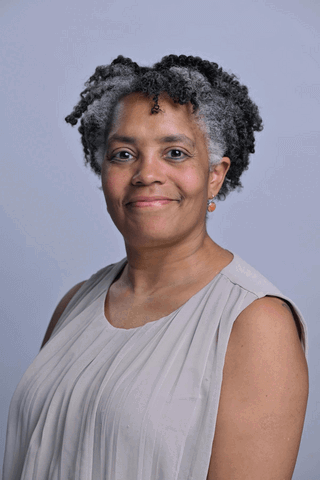
— Pam
Pamela Coin, LCSW · Licensed clinical social worker. I reviewed every question myself.
Before your next study session
Find your weakest area, free 3-minute diagnostic
No credit card, no pressure. Just an honest read on the one content area most likely to cost you the exam this time around.
Take the free diagnosticThree minutes. See your result and get the 15-page 2026 Pass Plan workbook, just your email. No account, no card.